

How much extra gas does your furnace burn each year?
Steady combustion,
real gas savings
Langfu helps factories burn less gas — and spend less money.
- No boiler rebuild, easy install
- 4–15% measured savings (up to 19.6%)
- Pay on verified results, fast payback
Measured · not theory
Peak measured gas saving · ceramic kiln · third-party verified
- CMA / CNAS third-party test reports
- 21+ industrial sites delivered
- ~100 national patents
- No shutdown, no boiler rebuild
What we do
One partner to cut your gas use and meet emission limits — without halting production
Clean-combustion energy saving
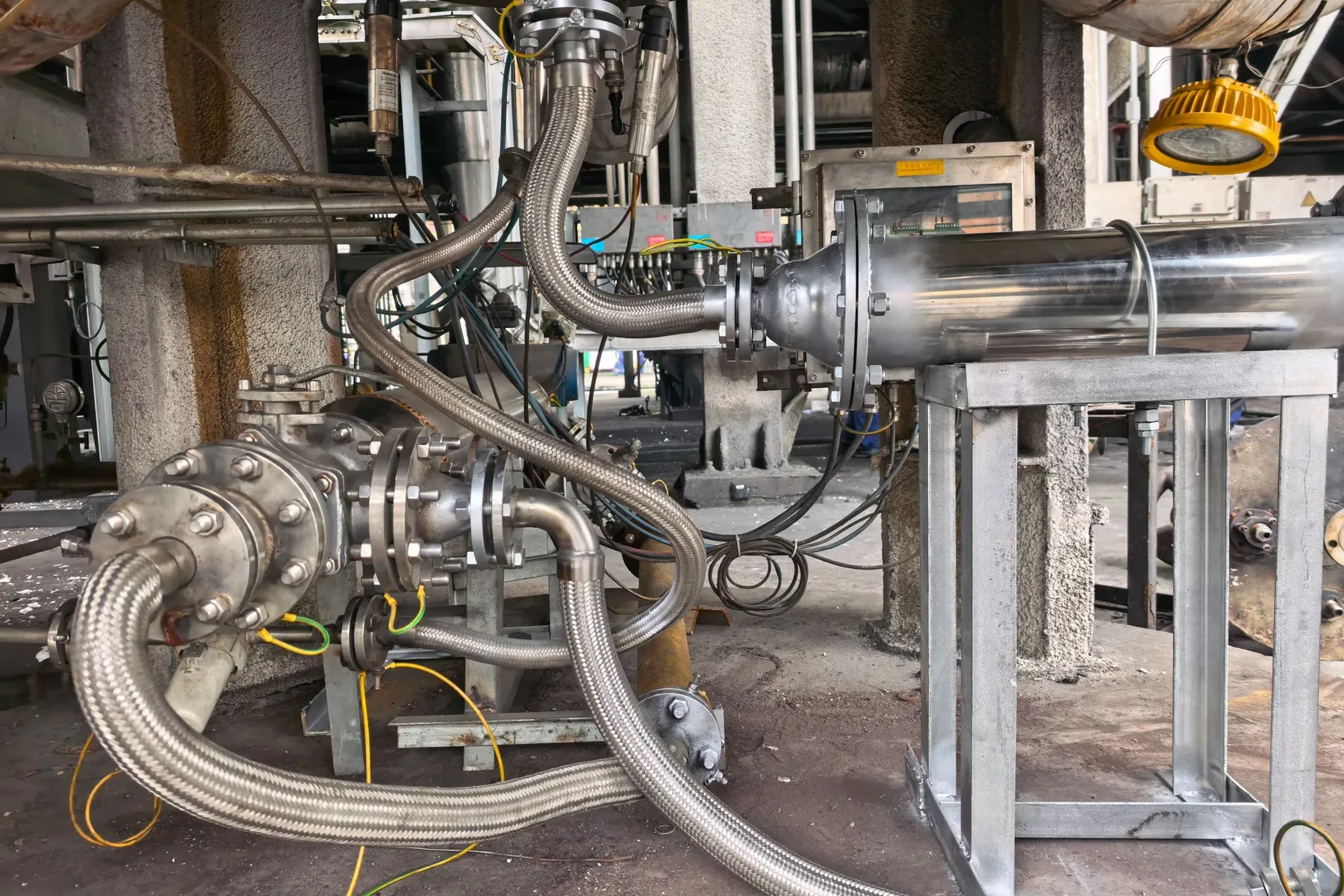
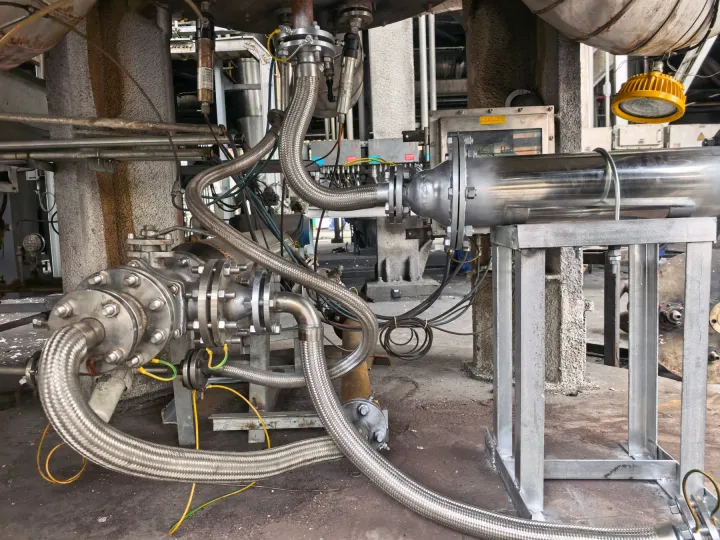
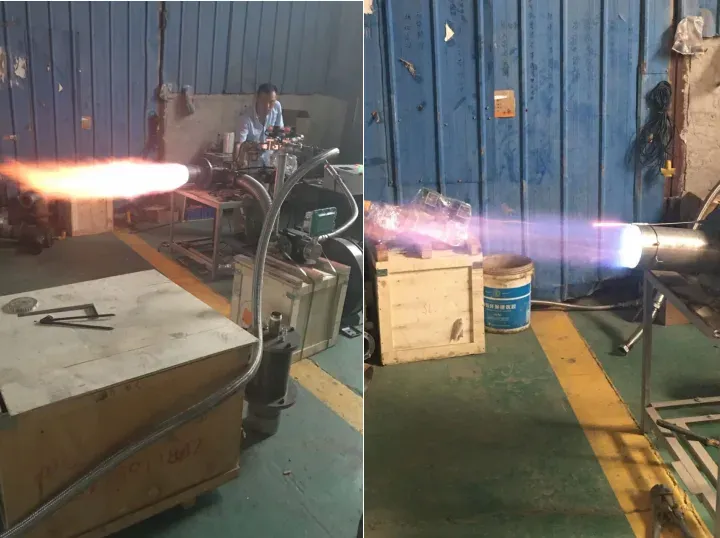
For gas kilns and boilers — multi-stage resonance activates fuel molecules before ignition, catalytic media lower the combustion threshold, low-NOx burners control emissions, optimised cutting nozzles improve gas distribution, and black-body coatings raise radiant heat transfer efficiency. Solutions can be deployed individually or combined, all without rebuilding the boiler.
- Resonance activation
- Catalytic combustion
- Low-NOx burners
- Cutting nozzles
- Black-body coating
Environmental engineering
Two decades of industrial environmental engineering — from source-based noise control and acoustic enclosures, to wastewater pre-treatment and compliant discharge, to full-site environmental remediation. We help factories meet increasingly strict standards without halting production.
- Noise control
- Wastewater treatment
- Integrated remediation
Engineering & retrofit service
Starting from on-site combustion testing and energy auditing, through tailored design, equipment selection, retrofit construction and commissioning, to formal acceptance testing and long-term operational support — fully self-delivered. Savings are not estimated: they are verified by jointly signed on-site acceptance data.
- Diagnosis
- Tailored design
- Retrofit delivery
- Ongoing support
Why it saves
An ordinary flame only burns part of the fuel — the rest escapes as light and flue gas
Industrial combustion losses occur at two points: incomplete combustion lets chemical energy slip away unburned, and low convective heat-transfer efficiency lets thermal energy escape up the stack. We use resonance activation to raise combustion completeness, and black-body coatings to convert convective heat into high-efficiency infrared radiation — same output, less gas, fewer pollutants. No boiler rebuild, easy to install, no clogging and no secondary pollution.
The infrared physics · Every technology we build rests on one physical fact: methane absorbs infrared strongly at 3.3μm and 7.6μm. Let the gas "catch" energy in those bands before combustion — activation energy falls, combustion completes — and that is where the savings come from.
Operate it
Drag the air-fuel ratio — watch combustion respond
Rich burns yellow, lean runs cold, near-stoichiometric is cleanest; switch on resonance activation to lower the threshold and save more — the physics behind every product.
Products
A gas-saving fix for every kiln and boiler
Why Langfu
We turn "how much can we save?" into a verifiable engineering commitment
No boiler rebuild
All solutions are retrofitted externally or applied as coatings — no main-furnace overhaul, minimal downtime, short installation cycle, no clogging and no secondary pollution over the long run.
Measured savings
Savings are not estimated from models — they are verified by jointly signed on-site acceptance data. Historical projects average 4–15%, with a peak measured gas reduction of 19.6%.
End-to-end service
Diagnose, design, deliver, operate — one team responsible from first site visit to long-term technical support. No hand-offs, no gaps.
Research-backed
Core technology developed jointly with Zhejiang Univ., CUMT, Chongqing Univ. and NJUST — academic research translated into production-ready engineering solutions.
Solutions
Built around your industry
Ceramic & Glass Kilns
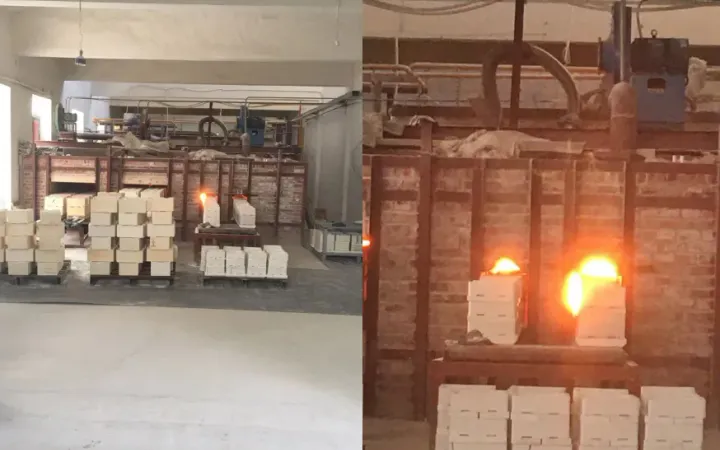
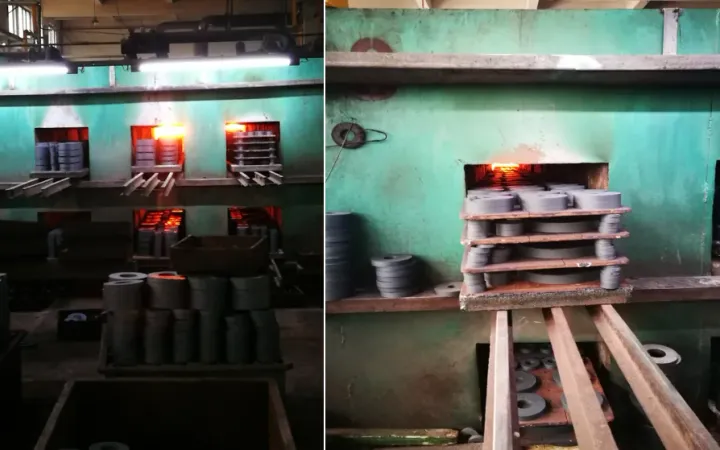
High-temperature kilns are the dominant energy consumer in ceramics and glass manufacturing. Heavy gas throughput, persistent fuel cost pressure, and uneven heat distribution that drives firing variability and elevated reject rates are compounded by tightening NOx limits that make business-as-usual combustion increasingly untenable. Langfu addresses all three constraints through a coordinated combination of catalytic burner replacement, custom-engineered burner-system retrofits, and nano black-body radiation coatings applied to burner bodies and radiant tubes. These technologies reinforce one another: catalytic combustion lowers the ignition threshold and accelerates complete fuel oxidation; black-body coatings raise surface emissivity toward the theoretical maximum, distributing radiant heat uniformly across the kiln chamber; resonance activation pre-treats the gas supply at the molecular level, reducing unburned fuel in the flue stream. The result — verified by on-site acceptance measurement — is gas savings of up to 19.6%, a substantially more uniform temperature field, and stable product quality, all achieved without halting production.
Metallurgy & Heat Treatment
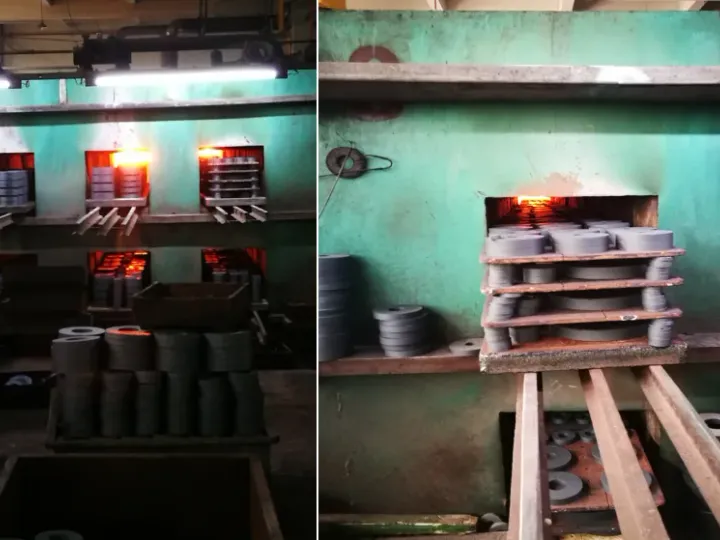
Heat-treatment furnaces, continuous annealing lines, and hot-blast stoves demand exacting temperature uniformity and fast, repeatable heat-up — even a few tens of degrees of deviation across the work zone can produce inconsistent grain structure, scatter in tensile and yield strength, and batch-to-batch quality variation that is difficult to trace or correct downstream. Simultaneously, NOx emission standards in the metallurgical sector are tightening on successive regulatory cycles, making end-of-pipe treatment an increasingly costly and uncertain compliance path. Langfu's approach pairs catalytic combustion with low-NOx staged burners to suppress thermal NOx at the point of formation, and combines this with multi-stage resonance activation that raises gas-molecule reactivity before the fuel reaches the burner. The outcome is a single integrated retrofit that simultaneously reduces gas consumption per unit of output and drives NOx emissions well below regulatory limits — without requiring separate investment in flue-gas denitrification equipment.
Industrial Boilers & Hot-Blast Stoves
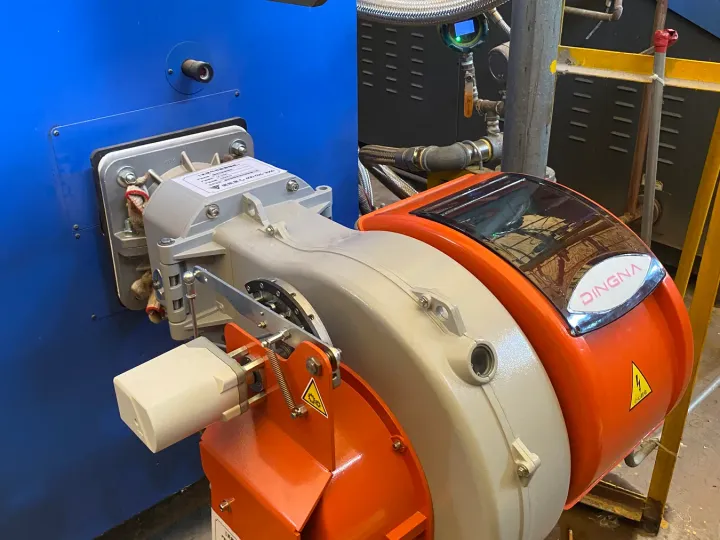
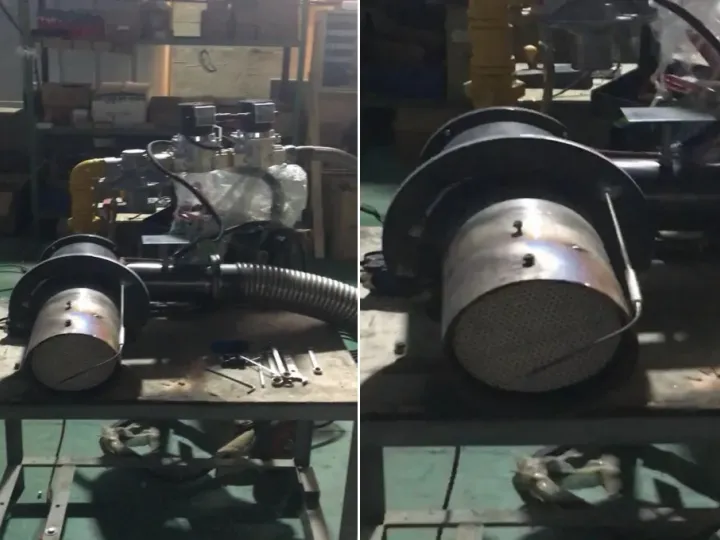
Industrial boilers and hot-blast stoves run continuously, often year-round, making fuel the single largest operating cost — and any improvement in combustion efficiency, even a few percentage points, compounds into substantial annual savings at the scale of industrial gas consumption. At the same time, dual compliance pressure on NOx and CO tightens with each regulatory revision, creating financial and reputational risk for facilities that depend on legacy combustion systems. Langfu's solution centres on resonance activation units installed in-line on the existing gas supply and low-NOx burners that replace the original combustion head, leaving the boiler vessel structure entirely untouched. There is no requirement for extended shutdown or major civil works. Savings are not projected from simulation — they are verified by on-site acceptance measurement before and after retrofit, with long-term tracking to confirm that performance is sustained.
Metal Cutting & Welding
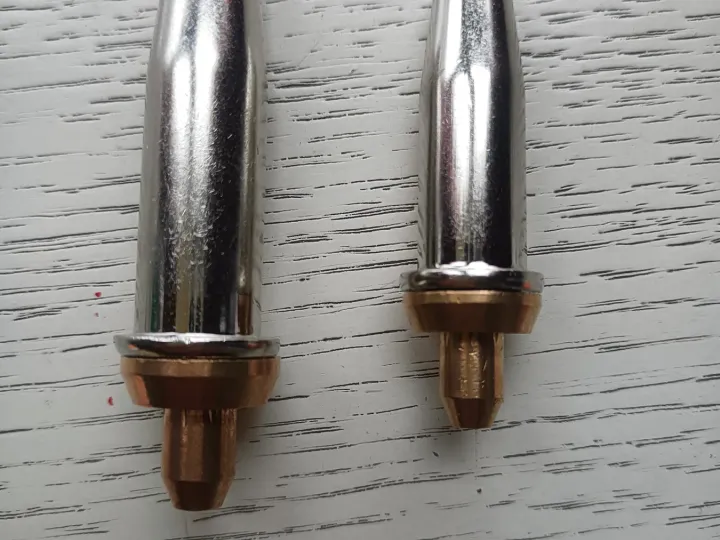
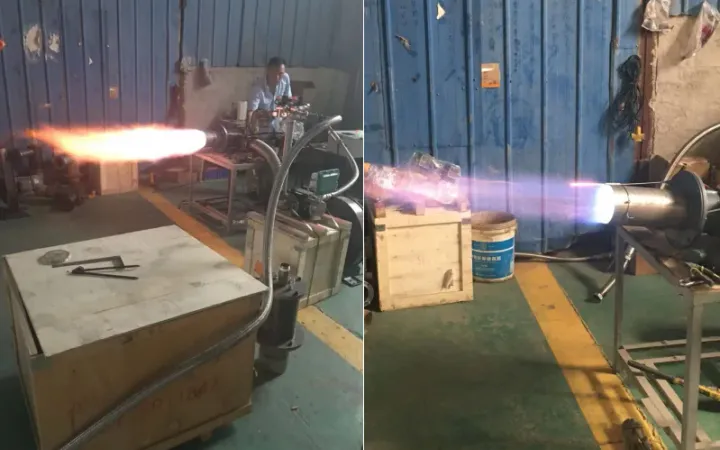
Gas cutting and welding operations must balance fuel economy against cut precision — two objectives that conventional nozzle design forces into unnecessary conflict. Legacy nozzle bore geometries allow turbulent internal flow that destabilises the flame cone, scatters heat across a wide kerf zone, and wastes gas on incomplete combustion at the nozzle tip. Langfu's energy-saving nozzles apply precision flow-channel geometry and flame-focusing design to straighten the gas stream into a stable laminar flow, concentrating cutting heat tightly at the kerf. The result, verified by on-site comparative measurement, is approximately 14% gas saving alongside measurably improved cut-face quality and dimensional precision. The nozzles fit mainstream torch bodies through standard interfaces — replacement is identical to swapping a legacy nozzle, no adaptation or operator retraining required. At large-scale production volumes, the gas-saving benefit compounds directly with usage, and payback is very short.
Cases
Proven by on-site measured results, not theoretical estimates
How we work
Four steps — turning saved gas into profit on your books
- 01
Diagnose
Engineers on site measure combustion parameters, thermal efficiency and emissions to pinpoint actual energy loss
- 02
Design
Tailored retrofit plan based on diagnostic findings, with projected savings rate and payback period stated upfront
- 03
Deliver
Self-managed fabrication or procurement, on-site retrofit construction, installation and combustion commissioning
- 04
Operate
Jointly signed acceptance data confirms savings; ongoing technical support ensures sustained performance over the long term
Get a proposal
Curious how much your kiln or boiler could save?
Tell us your operating conditions and we will propose a targeted retrofit with an expected-return estimate.