

Solution
Metal Cutting & Welding
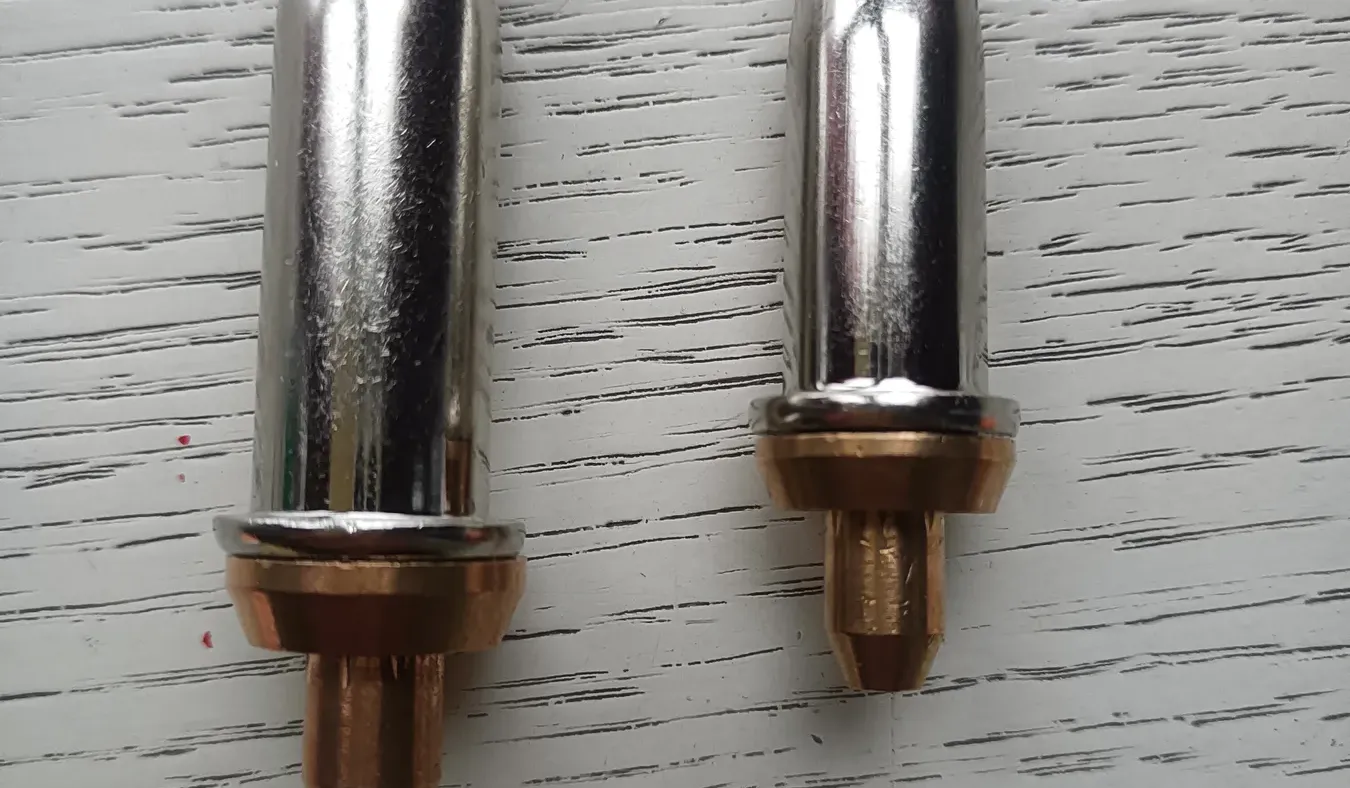
Gas cutting and welding operations must balance fuel economy against cut precision — two objectives that conventional nozzle design forces into unnecessary conflict. Legacy nozzle bore geometries allow turbulent internal flow that destabilises the flame cone, scatters heat across a wide kerf zone, and wastes gas on incomplete combustion at the nozzle tip. Langfu's energy-saving nozzles apply precision flow-channel geometry and flame-focusing design to straighten the gas stream into a stable laminar flow, concentrating cutting heat tightly at the kerf. The result, verified by on-site comparative measurement, is approximately 14% gas saving alongside measurably improved cut-face quality and dimensional precision. The nozzles fit mainstream torch bodies through standard interfaces — replacement is identical to swapping a legacy nozzle, no adaptation or operator retraining required. At large-scale production volumes, the gas-saving benefit compounds directly with usage, and payback is very short.
- Approximately 14% measured gas saving, translating to a direct reduction in fuel cost per metre of cut across all compatible operations
- Improved cut-face quality and dimensional precision, reducing downstream finishing allowance and the associated secondary machining cost
- Extended nozzle service life, lowering both replacement frequency and total consumable procurement cost
- More consistent flame behaviour across operating conditions, improving operator repeatability and reducing batch-to-batch cut variation
Challenges
Understanding the precise pain points is the starting point for any effective retrofit.
- High gas consumption makes fuel a significant and often overlooked share of total cutting cost at production scale
- Flame instability from turbulent nozzle flow causes variable cut-face roughness and dimensional scatter, increasing downstream finishing allowance
- Fast nozzle wear at the bore drives high replacement frequency, generating both direct material cost and production interruption
- Cumbersome parameter re-adjustment when switching plate thickness or material slows changeover and reduces operator throughput
- Uncertainty about fit compatibility or the need to retrain operators creates resistance to adopting replacement nozzles, even where the economic case is clear
- Large-scale cutting operations hold significant aggregate gas-saving potential, but lack access to a systematic, size-range-complete solution
Our approach
We combine Langfu's proven product stack to fit your kiln type and operating conditions.
- 01Precision internal flow-channel geometry eliminates turbulence at the bore, delivering a stable, tightly focused laminar flame cone with consistent geometry across the operating range
- 02Flame-focusing design concentrates cutting heat at the kerf zone rather than dispersing it laterally, improving thermal penetration efficiency and enabling cleaner, faster cuts
- 03Standard torch-interface compatibility ensures drop-in replacement — the installation procedure is identical to a legacy nozzle swap, with no adaptation tooling or fixture changes
- 04Graded size range engineered to cover the principal plate thicknesses and metal types encountered in industrial cutting, providing a complete system solution rather than a single-point fix
- 05On-site comparative testing against the incumbent nozzle, with measured acceptance data — gas consumption and cut quality — as the delivery benchmark
- 06Bulk procurement packages and technical-support arrangements to serve large-scale production environments with centralised procurement and consistent quality supply
Outcomes
Measured on-site acceptance data is the only delivery benchmark.
- Approximately 14% measured gas saving, translating to a direct reduction in fuel cost per metre of cut across all compatible operations
- Improved cut-face quality and dimensional precision, reducing downstream finishing allowance and the associated secondary machining cost
- Extended nozzle service life, lowering both replacement frequency and total consumable procurement cost
- More consistent flame behaviour across operating conditions, improving operator repeatability and reducing batch-to-batch cut variation
- Drop-in replacement with zero operator retraining requirement — adoption friction is minimal, and transition is immediate
- Very short payback period that shortens further at higher usage volumes, with annual savings scaling proportionally to cutting throughput
Get a proposal
Curious how much your kiln or boiler could save?
Tell us your operating conditions and we will propose a targeted retrofit with an expected-return estimate.