

Solution
Industrial Boilers & Hot-Blast Stoves
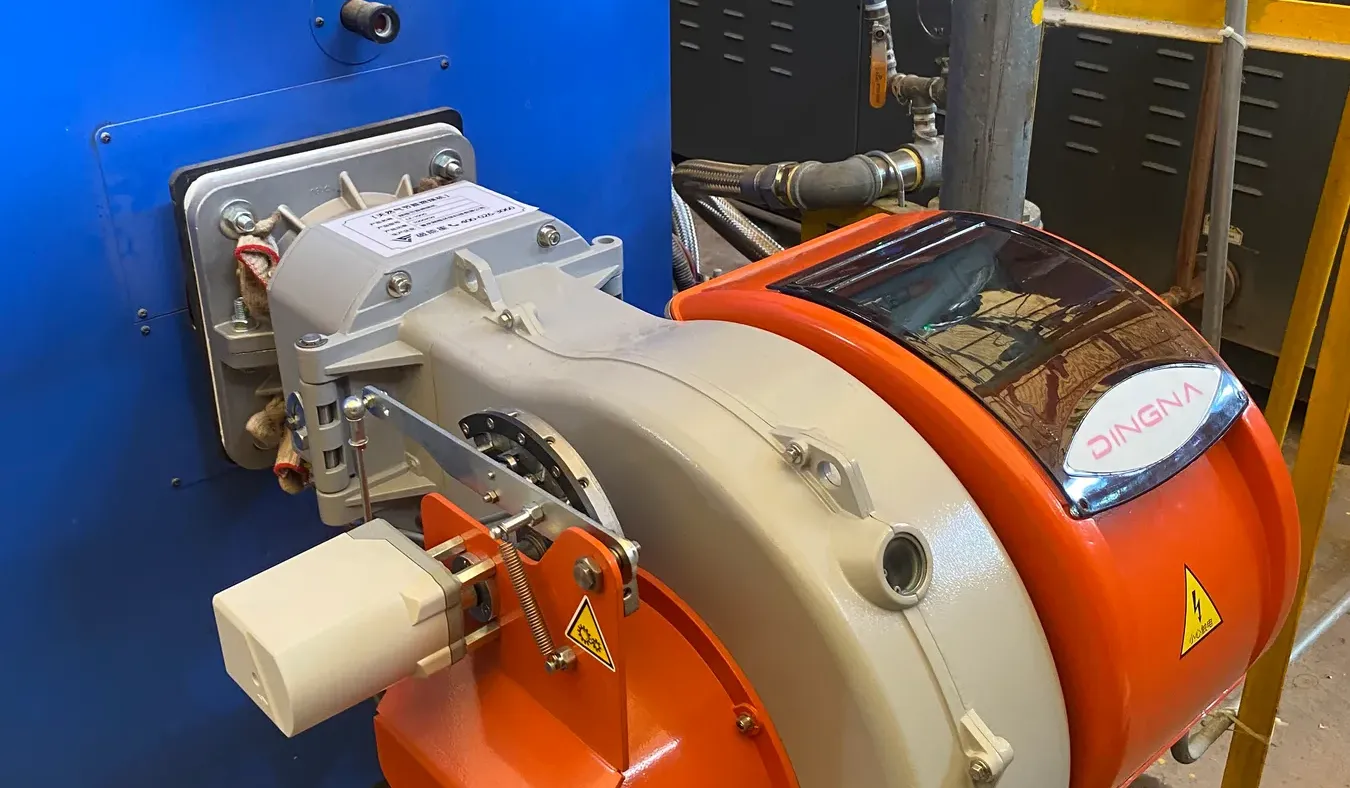
Industrial boilers and hot-blast stoves run continuously, often year-round, making fuel the single largest operating cost — and any improvement in combustion efficiency, even a few percentage points, compounds into substantial annual savings at the scale of industrial gas consumption. At the same time, dual compliance pressure on NOx and CO tightens with each regulatory revision, creating financial and reputational risk for facilities that depend on legacy combustion systems. Langfu's solution centres on resonance activation units installed in-line on the existing gas supply and low-NOx burners that replace the original combustion head, leaving the boiler vessel structure entirely untouched. There is no requirement for extended shutdown or major civil works. Savings are not projected from simulation — they are verified by on-site acceptance measurement before and after retrofit, with long-term tracking to confirm that performance is sustained.
- Average measured gas savings of 4%–15%; at industrial consumption volumes, even the lower end of this range translates to substantial annual cost reduction
- Sustained NOx and CO compliance across all operating loads, eliminating the financial and reputational risk of exceedance events
- Lower flue-gas exit temperature and improved boiler thermal efficiency, recovering heat that was previously lost through the stack
- More stable combustion, smoother boiler operation, and extended intervals between planned overhauls
Challenges
Understanding the precise pain points is the starting point for any effective retrofit.
- Fuel cost dominates total operating expenditure, and its cumulative weight grows heavier with every year of continuous operation
- NOx and CO exceedances carry escalating regulatory risk — enforcement actions, production restrictions, and financial penalties are material concerns
- Below-design thermal efficiency and elevated flue-gas exit temperature signal recoverable heat being lost at scale through the stack
- Operations cannot tolerate extended production downtime or structural modifications to the boiler vessel
- Ageing combustion systems drift outside their design operating envelope over time, causing efficiency to erode gradually and invisibly
- Multiple boilers running in parallel show divergent energy consumption, making uniform optimisation and performance management difficult
Our approach
We combine Langfu's proven product stack to fit your kiln type and operating conditions.
- 01Resonance activation units installed in-line on the gas supply main or branch lines, pre-treating fuel at the molecular level to raise reactivity — the boiler vessel is left completely untouched
- 02Low-NOx burner replacement with staged combustion technology controls peak flame temperature, suppressing thermal NOx formation at the chemical source rather than treating it in the flue stream
- 03Systematic on-site energy audit and combustion testing before retrofit, establishing a measured baseline that precisely quantifies available savings headroom
- 04Air-to-fuel ratio optimisation and combustion parameter calibration to find the operating point that minimises flue-gas losses while maintaining complete combustion
- 05Phased retrofit schedule across multiple boilers, coordinated with planned maintenance windows to keep cumulative production disruption to a minimum
- 06Post-retrofit measurement and long-term performance tracking — acceptance is based on verified field data, not design estimates, and monitoring continues to confirm sustained savings
Outcomes
Measured on-site acceptance data is the only delivery benchmark.
- Average measured gas savings of 4%–15%; at industrial consumption volumes, even the lower end of this range translates to substantial annual cost reduction
- Sustained NOx and CO compliance across all operating loads, eliminating the financial and reputational risk of exceedance events
- Lower flue-gas exit temperature and improved boiler thermal efficiency, recovering heat that was previously lost through the stack
- More stable combustion, smoother boiler operation, and extended intervals between planned overhauls
- Payback period typically one to two years, after which savings flow directly to the bottom line for the remaining equipment life
- Minimal production disruption during installation — retrofit windows are short and coordinated with existing maintenance schedules
Get a proposal
Curious how much your kiln or boiler could save?
Tell us your operating conditions and we will propose a targeted retrofit with an expected-return estimate.