
Energy & Carbon Reduction
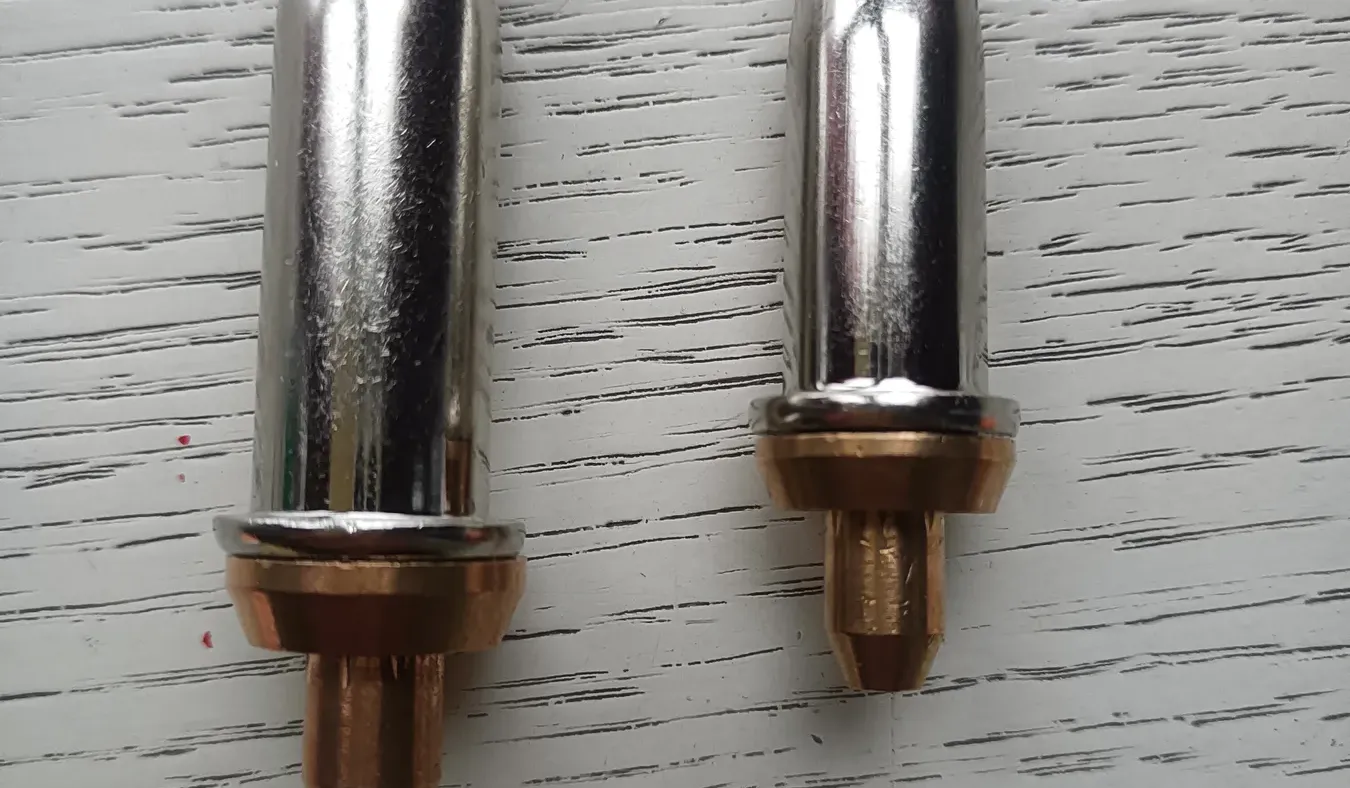
Energy-Saving Cutting Nozzle
A precision-redesigned internal flow path and flame-focusing exit geometry concentrate the cutting flame tightly on the work line rather than dispersing heat to the surrounding metal. Adopted without any torch modification, the nozzle delivered a measured 14% gas saving at the Xuzhou Yuanyang Magnetic Materials site under normal production conditions — verified independently — while simultaneously improving cut-edge quality and reducing the heat-affected zone.
Overview
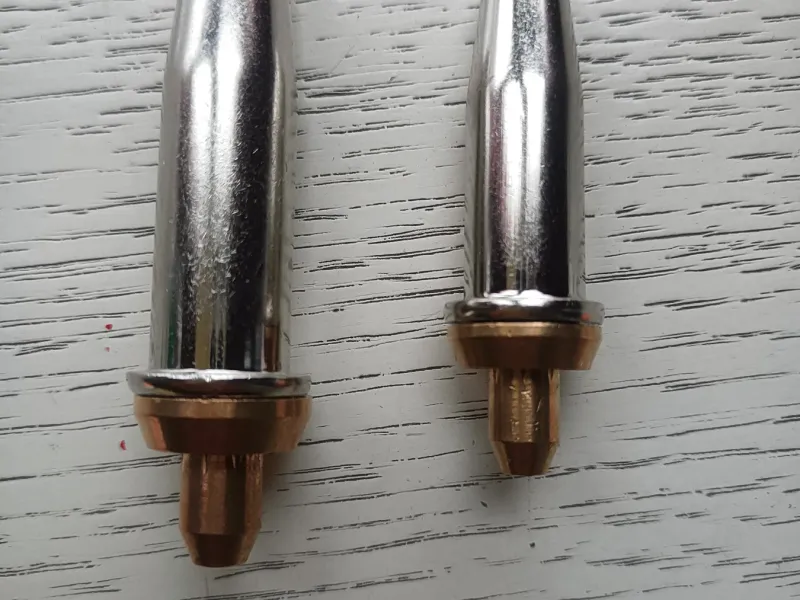
The cutting nozzle is the terminal component through which fuel gas and oxygen converge, mix and exit as the working flame. Everything that defines cutting performance — the flame's temperature profile, spatial width, standoff stability and gas consumption per unit length of cut — traces directly to the internal channel geometry of the nozzle. Conventional nozzle designs inherited from older manufacturing standards leave measurable efficiency on the table: turbulent losses in the mixing zone dissipate energy before it reaches the flame; an imprecise exit geometry allows the flame to diverge beyond the cut line; and heat that spreads laterally into the surrounding base metal represents fuel consumed without productive cutting work. In high-volume cutting operations, these losses add up to a significant and avoidable gas cost.
Langfu's energy-saving cutting nozzle rebuilds the internal flow path from fluid-dynamic first principles rather than incremental modification of a legacy design. The mixing-channel cross-section and length-to-diameter ratio are shaped to achieve thorough, homogeneous gas-oxygen mixing while suppressing turbulent kinetic-energy dissipation — ensuring that the chemical potential of the mixed charge is fully preserved at the nozzle exit. The exit section introduces a flame-focusing geometry: a carefully calculated convergence ratio and cone angle that maintain near-laminar conditions in the exit jet, narrowing the flame divergence angle significantly. The effective heat-release zone contracts to the width of the cut line, with minimal lateral spread into the parent material. The practical consequence is straightforward: the same heating outcome — melting and oxidizing the cut path — requires less gas supply, or the same gas supply produces a faster and cleaner cut.
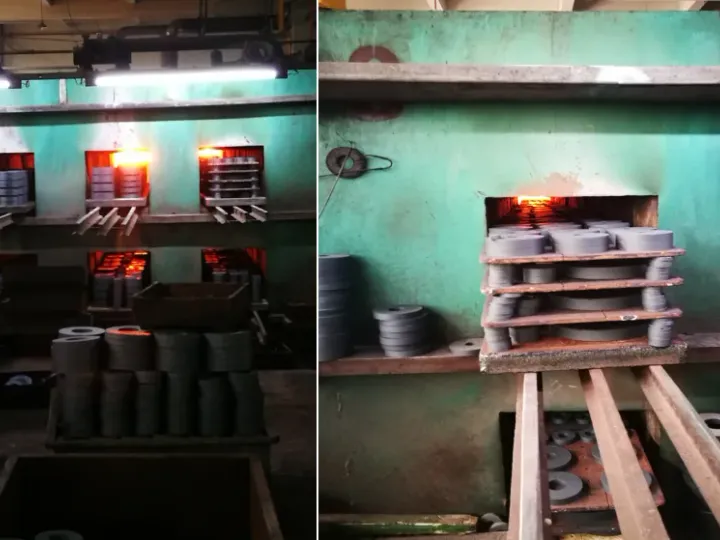
The 14% gas saving at the Xuzhou Yuanyang Magnetic Materials site was measured under normal production conditions: standard stock thicknesses, standard feed rates and the facility's regular cutting operators. The result was verified jointly by the client's production engineering team and an independent party. This is the figure Langfu publishes as the reference baseline for this product — not a controlled laboratory result under optimized conditions, but a real industrial cutting station running normal work. Cut-edge quality assessments conducted alongside the gas measurement confirmed a narrower heat-affected zone, improved kerf-wall perpendicularity and reduced dross adhesion, consistent with the more focused and controlled flame profile the nozzle geometry produces.
From a practical adoption standpoint, the nozzle requires nothing beyond threading it into the standard torch body — the interface is identical to the original nozzle, and no tools or adapter fittings are needed. Operators report no change in handling characteristics, flame appearance at ignition or extinguish procedure. For facilities where gas-flame cutting runs continuously across multiple shifts — steel fabrication shops, magnetic-material processors, machined-component manufacturers — the annual gas reduction translates into a payback period measured in months against the nozzle's purchase cost, making it consistently one of the fastest-returning items in Langfu's product range.
Beyond the 14% field gas saving at Xuzhou Yuanyang, the nozzle's cutting performance has been independently verified by a national authority. The Harbin Welding Institute of the China Academy of Machinery (CNAS L0493) tested the constant-pressure mechanical cutting nozzle G03 3# to standard JB/T 7950-2014: under propane, cutting speed rose from 230 to 280 mm/min (+21.7%); under methane, from 310 to 360 mm/min (+16.1%). The accompanying novelty-search report separately measured cutting speed on 25 mm steel plate at 609 mm/min against a reference of 420 mm/min — a gain of about 45%. The product has also cleared a formal novelty search by the MOST Southwest Information Centre (subject “An energy-saving cutting nozzle and its manufacturing method”, ref. J20265001269043453), concluding that no identical prior art exists at home or abroad and the design is novel.
Key advantages
- Precision-optimized internal channel profile minimizes turbulent energy dissipation in the mixing zone
- Flame-focusing exit geometry tightens the divergence angle, concentrating heat at the cut line itself
- Narrower heat-affected zone, cleaner kerf edges and improved cut-face perpendicularity
- 14% gas saving measured at Xuzhou Yuanyang under production conditions, jointly verified by client and independent check
- Drop-in compatible with mainstream torch bodies via the same thread interface — no tools, no modification
- Identical handling characteristics and startup procedure: no retraining required
- Tested by the Harbin Welding Institute of China Academy of Machinery (CNAS L0493, to JB/T 7950-2014): propane cutting speed +21.7% (280 vs 230 mm/min), methane cutting speed +16.1% (360 vs 310 mm/min)
- Novelty-search testing on 25 mm steel plate recorded 609 vs 420 mm/min — a roughly 45% gain in cutting speed
- Covered by a MOST Southwest Information Centre novelty-search report — “An energy-saving cutting nozzle and its manufacturing method”, concluded novel (ref. J20265001269043453)
More in this category