

Chemicals
·Tangshan, HebeiChemical Kiln Retrofit, Tangshan Huayi
A chemical-plant kiln received a catalytic combustion retrofit — transparent flame, complete combustion and stronger radiant heat markedly improved temperature uniformity.
Measured key metrics
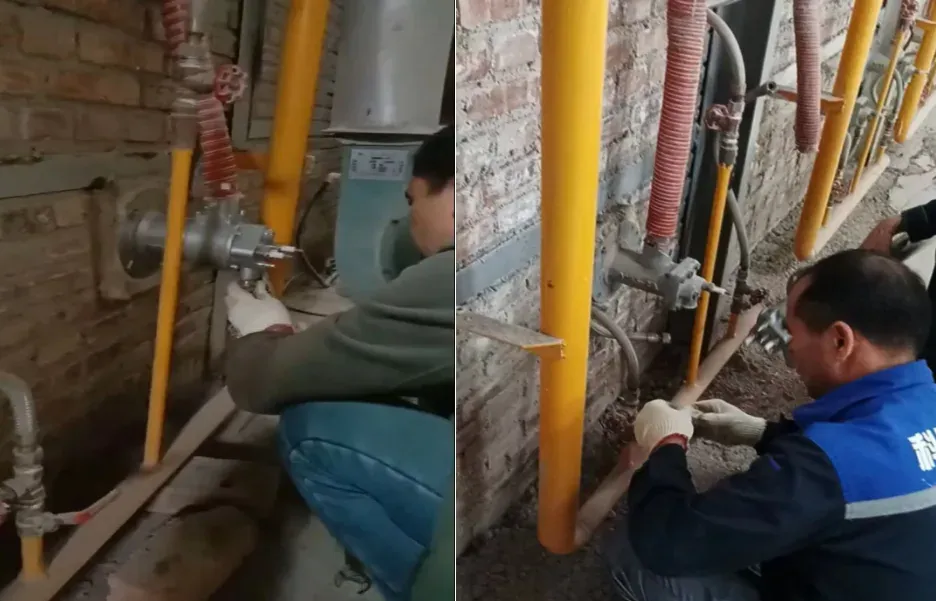
The kiln at Tangshan Huayi Industrial serves a chemical processing line where the quality and consistency of the thermal field inside the firing chamber are direct determinants of product specification compliance. The existing open-flame burners produced persistent incomplete combustion, generating excess temperature gradients and localised hot spots that undermined product consistency, increased batch-to-batch variability, and represented avoidable fuel waste across every production cycle. The combination of elevated energy cost and product quality risk made the case for intervention unambiguous.
Langfu engineers completed a thorough on-site condition assessment — measuring flame behaviour, mapping temperature distribution across the chamber, and quantifying heat-loss pathways — before finalising a retrofit specification based on full catalytic-burner replacement. Scheduling of all installation work within the plant's planned maintenance windows meant the upgrade was completed without triggering unplanned downtime, protecting production commitments and avoiding the broader commercial risks associated with unscheduled stoppages. Sufficient on-site time was reserved for systematic commissioning and verification before returning the kiln to service.
Catalytic burners achieve complete fuel oxidation through surface-catalysed reactions that proceed at temperatures lower than conventional open-flame combustion. The resulting reaction produces a transparent, high-radiance emission field with substantially greater infrared radiant-heat flux than the replaced open-flame units. Infrared radiation is a far more efficient heat-transfer mechanism than convection at kiln-scale dimensions: it penetrates directly to the kiln walls and load, delivers heat more uniformly across the full chamber cross-section, and eliminates the asymmetric thermal gradients that gave rise to the hot-spot problem.
Post-retrofit operation has confirmed the improvement across all key indicators: combustion is consistently complete and stable, the flame is transparent and compact, radiant-heat output is stronger, and temperature uniformity throughout the kiln chamber is markedly better than the pre-retrofit baseline. Chemical product quality consistency has improved accordingly, scrap rates have fallen, and extended operation has produced no evidence of burner clogging, catalyst degradation, or secondary contamination — validating both the performance and the long-term reliability of the catalytic combustion upgrade in a demanding chemical-industry application.
Get a proposal
Curious how much your kiln or boiler could save?
Tell us your operating conditions and we will propose a targeted retrofit with an expected-return estimate.